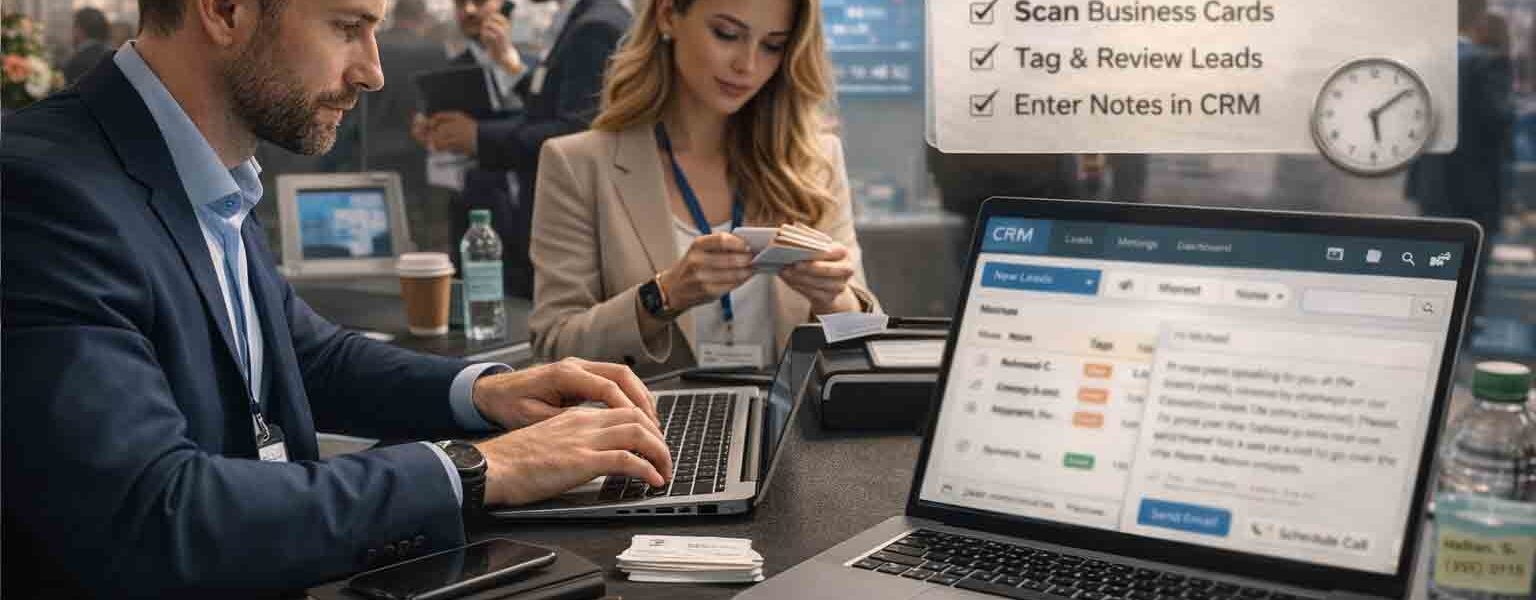
The real sale often begins after the trade show ends. Business cards are scanned. Leads are tagged. Notes are rushed into a CRM before the next visitor steps up. Then the doors close and your team faces the most critical window of all, the first twenty four hours after the event. If your follow up messages are slow, incomplete, or generic, that momentum disappears. Speed matters. Accuracy matters even more.
Digital follow ups are not just about sending an email. They require clean data entry, sharp note taking, and confident typing under pressure. Teams that treat typing as a professional skill move faster and make fewer mistakes. Using a structured typing speed test during pre show training gives your staff a measurable baseline and a practical way to improve before they ever step onto the show floor.
Quick Brief: Faster Follow Ups in Action
- Train typing speed and accuracy before the event
- Standardize note taking templates for booth staff
- Set clear digital response timelines within 24 hours
- Track performance metrics for improvement
Why Speed Changes the Outcome
Trade shows are intense. Visitors speak to dozens of exhibitors in a single day. Buyers gather brochures and scan QR codes without thinking twice. Your team might have had a strong conversation, yet memory fades quickly. A follow up sent within hours stands out. A follow up sent three days later blends into noise.
Typing efficiency directly affects this timeline. If staff struggle to capture notes accurately, they rely on memory later. That leads to vague emails. It also increases administrative cleanup time. Faster typing allows team members to log product interests, pricing discussions, and next steps in real time. That means marketing can segment leads properly and sales can respond with tailored proposals.
Many teams focus heavily on booth design and messaging. They read guides on what makes a booth successful but overlook operational execution behind the scenes. Follow up speed is an operational discipline. It can be trained, measured, and improved.
Building Typing Confidence Before the Event
Typing under pressure feels different from typing at a desk. At a trade show, there is noise. There are interruptions. There is a queue forming. Staff must listen actively and type simultaneously. That dual task load exposes weak keyboard habits quickly.
Start with assessment. Measure words per minute and accuracy percentage. A baseline below forty words per minute slows down CRM entry significantly. Accuracy below ninety five percent increases correction time later. A short weekly practice routine in the month before the show creates muscle memory.
- Benchmark each team member using a timed typing drill.
- Set a realistic improvement goal, such as ten percent faster within three weeks.
- Incorporate show specific vocabulary into practice sessions.
- Simulate booth distractions during training.
This structure keeps improvement measurable. It also makes typing part of performance preparation, not an afterthought.
Standardizing Digital Note Taking
Speed alone does not guarantee useful data. Structure is critical. Without a clear template, staff capture inconsistent information. One person writes detailed notes. Another writes two vague lines. That inconsistency slows follow ups.
Create a short digital template inside your CRM. Keep it concise. Include fields for budget range, decision timeline, product interest, and specific objections. Add a final field labeled next action. This forces clarity at the moment of conversation.
Teams that already refine their approach to building business relationships can integrate this template into their relationship strategy. It aligns booth conversations with post event outreach seamlessly.
Operational Workflow for 24 Hour Response
Follow up speed depends on workflow design. Even a skilled typist cannot compensate for unclear ownership. Map out what happens once the show closes each day.
Define who reviews leads. Define who drafts emails. Define who approves discounts or samples. Assign a deadline for first contact, ideally within twelve hours. The shorter the gap, the warmer the connection remains.
| Stage | Owner | Target Time |
|---|---|---|
| Lead Entry Review | Booth Team Lead | Within 2 Hours |
| Segmentation and Tagging | Marketing Coordinator | Same Day |
| Personalized Email Draft | Sales Rep | Within 12 Hours |
| Call Scheduling | Account Manager | Within 24 Hours |
This visual clarity reduces friction. It also builds accountability. Teams perform better when expectations are specific and visible.
Accuracy, Not Just Speed
Typing fast with errors creates hidden costs. Incorrect email addresses bounce. Misspelled names weaken credibility. Wrong product codes confuse internal teams. Training must balance speed with precision.
Accuracy can be measured objectively. Many professional development frameworks, including guidelines referenced by the International Organization for Standardization, emphasize process control and error reduction. Applying similar thinking to trade show data entry ensures that quality remains consistent across the team.
Encourage staff to slow slightly during complex data capture, such as custom order requests. A one second pause prevents multiple corrections later. Build short review moments into the workflow before syncing leads to the central system.
Practical Drills That Mirror Show Conditions
Training should reflect reality. Practice typing while standing. Practice with background noise playing softly. Practice summarizing a short conversation in under one hundred words. These drills strengthen focus and listening skills simultaneously.
You can also stage mock interactions. One team member plays a buyer with specific needs. Another records notes in real time. Afterward, compare the typed summary to the original conversation. This reveals gaps in comprehension and speed.
Insert small competitions to keep morale high. Track weekly improvements in words per minute. Recognize the most improved team member, not just the fastest. This keeps the focus on growth rather than ego.
Aligning Digital Tools With Human Interaction
Technology supports follow up, yet it should never overshadow conversation quality. Staff must maintain eye contact and active listening. The keyboard should not become a barrier. Encourage brief note bursts rather than continuous typing.
After the visitor leaves, allocate thirty seconds to expand notes while details remain fresh. This micro routine prevents vague entries such as interested in pricing. Replace that with precise statements about volume expectations or distribution territories.
Teams that treat digital capture as part of their broader show preparation often outperform competitors. Strong preparation, as seen in discussions about professional show preparation, creates confidence across the board. Typing discipline fits naturally into that preparation culture.
Metrics That Matter After the Show
Training is only meaningful if results are tracked. Define clear performance indicators. Measure average time from lead capture to first contact. Measure email open rates. Measure conversion rates within thirty days.
Compare results from events where typing training was implemented against those without structured preparation. Patterns will emerge quickly. Faster and more accurate data entry correlates with improved response times. Improved response times often correlate with higher meeting bookings.
Share these insights transparently with the team. People respond positively when they see how their personal skill improvement impacts overall revenue.
Creating a Culture of Operational Excellence
Follow up speed is not a one time initiative. It is a cultural standard. Leadership must reinforce it consistently. Provide refresher typing sessions before major events. Update templates as product lines evolve. Review workflow charts quarterly.
Encourage peer coaching. Faster typists can share finger positioning techniques or shortcuts. Less confident staff can practice in small groups. Over time, the entire team moves closer to a shared performance baseline.
Operational excellence does not require dramatic changes. It requires repetition and attention to detail. Small improvements compound across multiple events each year.
Turning Conversations Into Confirmed Opportunities
A trade show conversation is a spark. The follow up is the fuel. If your team can type quickly, log accurately, and respond within hours, that spark grows into a meaningful business discussion. If not, it fades.
Training your trade show team for faster digital follow ups strengthens every stage of the pipeline. It protects the investment made in booth design, travel, and staffing. It transforms busy exhibition halls into measurable growth channels.
Faster typing is not a trivial skill. It is a competitive advantage hidden in plain sight. Equip your team with the right habits, clear workflows, and consistent practice. The results will show up in your inbox, your calendar, and your revenue reports.